
In short
Psoriatic arthritis is an inflammatory arthritis that develops in roughly one in five people with psoriasis. Skin disease usually comes first — sometimes by a decade — but around 15% of patients get joint symptoms before any rash.
- Category
- Spondyloarthritis
- Seen first as
- Joint pain and swelling in someone with psoriasis, however mild the skin disease
- Treated with
- NSAIDs and local injections
What is Psoriatic Arthritis?
PsA is heterogeneous: it can affect a few large joints, the small joints closest to the nails, the spine, whole fingers (dactylitis), or the tendon insertions (enthesitis). Nail pitting and onycholysis are important clues.
Untreated PsA erodes joints permanently, and a small subset progresses to arthritis mutilans. It is also associated with metabolic syndrome, fatty liver and depression, all of which need managing alongside.
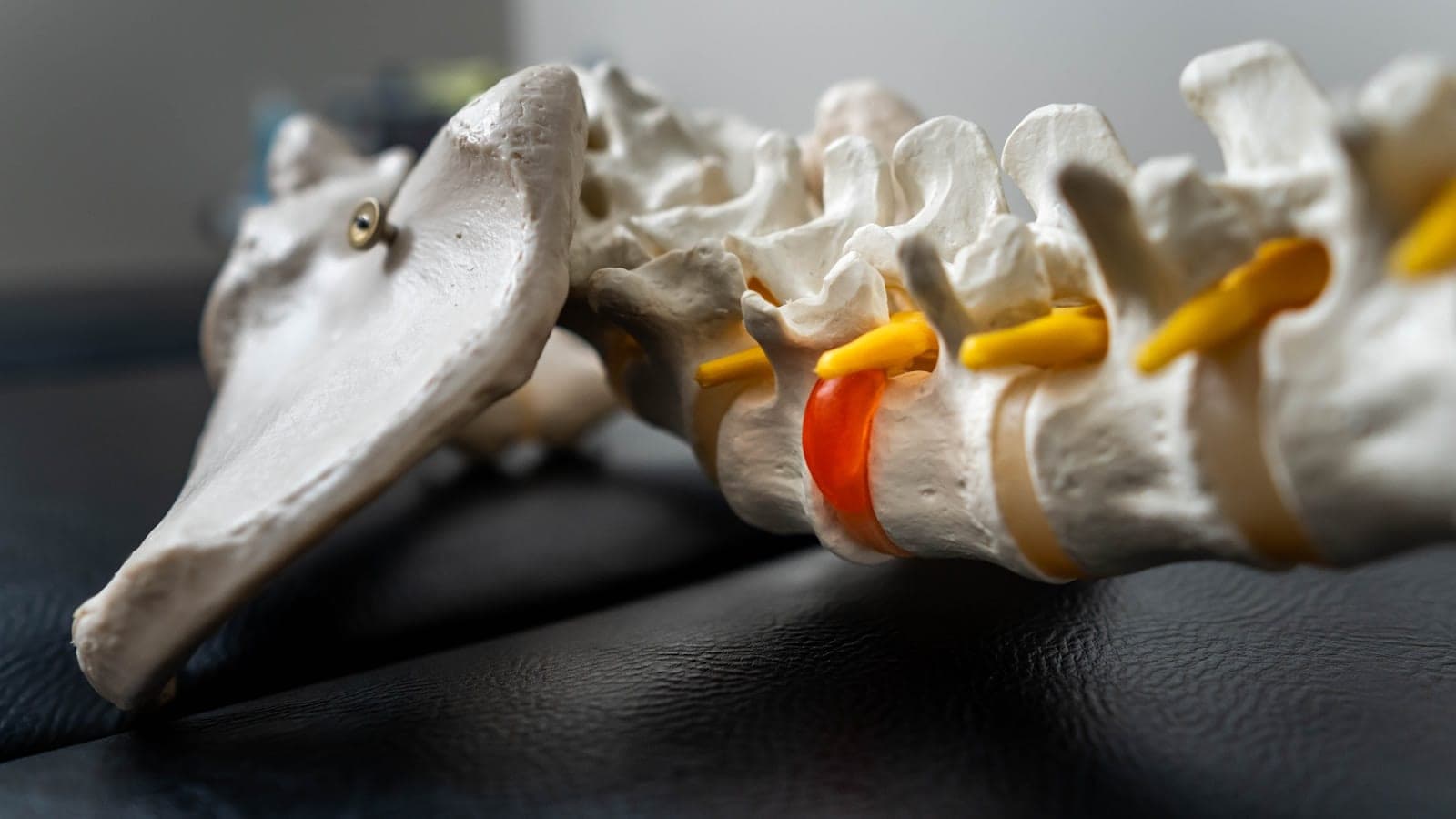 Illustrative
Symptoms of Psoriatic Arthritis
Early signs
- Joint pain and swelling in someone with psoriasis, however mild the skin disease
- Sausage-like swelling of an entire finger or toe (dactylitis)
- Pain at the heel, Achilles tendon or elbow insertion (enthesitis)
- Nail pitting, ridging, discolouration or separation from the nail bed
- Morning stiffness and inflammatory low back pain
If left untreated
- Distal interphalangeal joint destruction next to affected nails
- Telescoping shortened fingers (arthritis mutilans)
- Reduced spinal mobility from psoriatic spondylitis
- Eye inflammation — uveitis or conjunctivitis
- Established metabolic syndrome and fatty liver disease
Causes & risk factors
- Existing psoriasis, especially scalp, nail or intergluteal involvement
- Family history of psoriasis or psoriatic arthritis
- HLA-B27 and other HLA-C associations
- Physical trauma to a joint or tendon (deep Koebner phenomenon)
- Obesity, which increases both risk and treatment resistance
How Psoriatic Arthritis is diagnosed
No single test diagnoses a rheumatic disease. The diagnosis comes from combining the pattern of symptoms, the examination findings, and only the investigations that answer a specific question.
 Illustrative
Full skin and nail examination
Scalp, umbilicus, natal cleft and nails are checked deliberately — psoriasis in these hidden sites is missed by patients and by non-specialists alike.
CASPAR criteria assessment
A validated framework combining psoriasis, nail changes, dactylitis, negative rheumatoid factor and juxta-articular new bone formation.
Imaging
X-rays for the pencil-in-cup appearance and periostitis; ultrasound or MRI for enthesitis and early erosive change.
Blood tests
RF and anti-CCP are usually negative and help distinguish PsA from RA. CRP and ESR may be normal even in active PsA, so imaging carries extra weight here.
Metabolic screening
HbA1c, lipids, liver function and ultrasound — important both for cardiovascular risk and before starting methotrexate.
Treatment options
 Illustrative
NSAIDs and local injections
For mild oligoarticular disease and isolated enthesitis.
Conventional DMARDs
Methotrexate and leflunomide for peripheral joint disease, with methotrexate offering the advantage of treating skin and joints together.
Biologics targeted to the dominant problem
TNF inhibitors for erosive and axial disease; IL-17 inhibitors where skin disease is prominent; IL-23 inhibitors such as guselkumab and risankizumab for skin-dominant PsA; abatacept in selected patients.
Targeted oral therapy
Apremilast for milder disease; JAK inhibitors such as tofacitinib and upadacitinib for refractory joint disease.
Coordinated dermatology care
Skin and joints are treated as one disease. A shared plan avoids the common situation of two specialists prescribing overlapping immunosuppression.
Weight management
Weight loss in overweight patients measurably improves both response to biologics and rate of remission — one of the strongest lifestyle effects in all of rheumatology.
Medicine guides
How to take them, side effects, blood tests and pregnancy, for the medicines most often used for this condition.
Seek urgent medical attention if you have
- Rapidly deforming fingers or shortening of digits
- Red painful eye with blurring
- Widespread pustular skin flare with fever
- New chest pain or breathlessness, given the raised cardiovascular risk
- Signs of infection while on biologics
Do not wait for a scheduled appointment for any of the above. Call the clinic on +91 70571 19999 or attend the nearest emergency department.
Frequently asked questions about Psoriatic Arthritis
My psoriasis is mild. Can I still get psoriatic arthritis?
Can psoriatic arthritis appear before the rash?
Will treating my skin also treat my joints?
Get an expert opinion on Psoriatic Arthritis in Pune
Consultations at the Ravet clinic in Pimpri-Chinchwad. Bring your previous reports — a properly reviewed history usually saves repeating tests.
Part of a wider group
Spondyloarthritis & Back PainBack pain that is worse at rest and better with movement is not a mechanical strain.How psoriatic arthritis is treated at the clinic
Psoriatic Arthritis is managed under spondyloarthritis & back pain — the same pathway, targets and monitoring schedule described in full on that page.
Related conditions
Ankylosing Spondylitis
The back pain that improves with exercise and worsens with rest, and is missed for years.
Rheumatoid Arthritis
Symmetric small-joint swelling that responds best when treated within the first 12 weeks.
Reactive Arthritis
Arthritis that follows an infection elsewhere, usually self-limiting, occasionally not.